
Do You Have to Wait Until the End of the Tax Year to Claim a Tax Refund?
Many people assume they need to wait until the end of the tax year before they can claim a tax refund.
In reality, that is not always the case.
Sometimes a refund can be issued during the tax year if too much tax has been deducted. In other situations, the final position can only be confirmed once the tax year has finished.
Understanding how this works can help you recover overpaid tax sooner and avoid unnecessary delays.
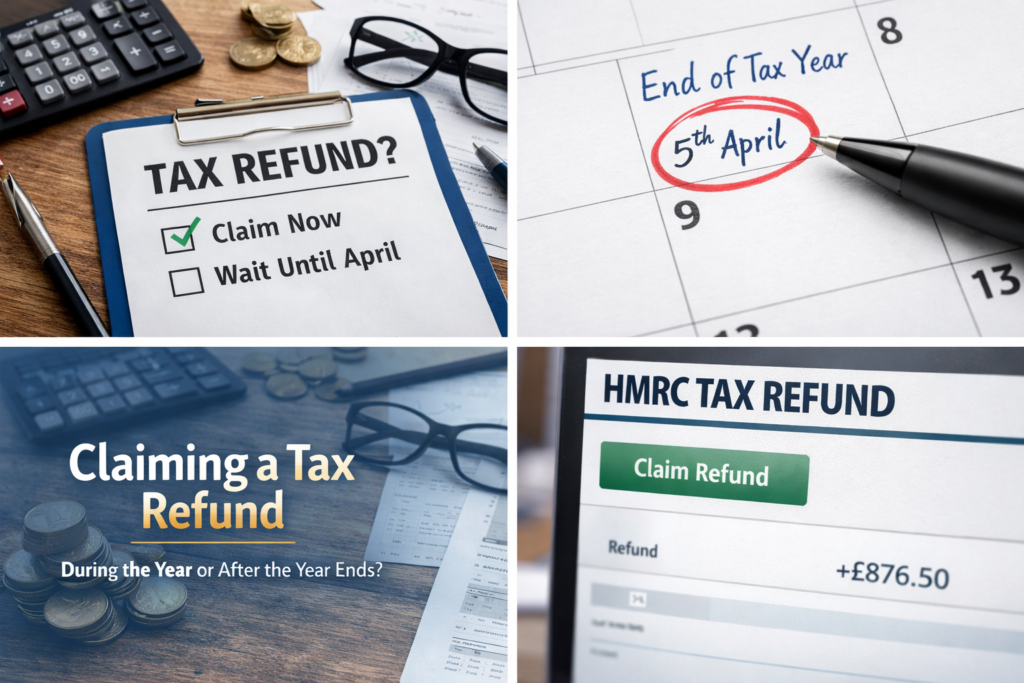
What Is a Tax Refund?
A tax refund happens when more tax has been paid than was actually due.
This can occur for several reasons, including:
• An incorrect tax code
• Too much tax deducted through PAYE
• Changes in income during the year
• Allowable expenses or tax reliefs being claimed
When this happens, HMRC may return the overpaid tax once the position has been reviewed.
The Tax Year
The tax year runs from 6 April to 5 April the following year.
Many tax calculations are finalised after the tax year ends because HMRC then has the full record of income and tax paid during the year.
However, some adjustments can be made earlier.
When You May Receive a Tax Refund During the Year
In certain situations, overpaid tax can be corrected before the tax year ends.
A Tax Code Is Updated
If HMRC changes your tax code, the adjustment is usually processed through payroll. Any overpaid tax may be refunded through a future payslip.
You Leave a Job
If you stop working and do not start another job straight away, you may be able to claim a refund using forms such as P50.
PAYE Has Deducted Too Much Tax
Sometimes employers deduct too much tax through PAYE. HMRC may correct this during the year if the issue is identified early.
When You Usually Wait Until the End of the Tax Year
In many situations the final tax position is confirmed after the tax year ends.
This is common if you:
• Complete a Self Assessment tax return
• Have multiple sources of income
• Receive dividends as a company director
• Claim certain tax reliefs
In these cases, HMRC needs the full year’s information before confirming whether a refund is due.
How HMRC Issues Tax Refunds
Refunds are usually processed in one of the following ways.
PAYE Employees
HMRC may send a P800 tax calculation after reviewing your records.
If a refund is due, you will normally be asked to claim it through your HMRC online account, or HMRC may send a cheque.
Self Assessment
If your Self Assessment return shows you have overpaid tax, the refund can be requested through your online HMRC account once the return has been submitted.
Company Directors
Directors who receive income through salary and dividends normally confirm their final tax position through Self Assessment.
How Long Do You Have to Claim a Tax Refund?
HMRC normally allows four years from the end of the relevant tax year to claim back overpaid tax.
For example:
| Tax Year | Deadline to Claim |
|---|---|
| 2023/24 | 5 April 2028 |
| 2022/23 | 5 April 2027 |
After this deadline, the refund may no longer be available.
How to Claim a Tax Refund
The process usually involves a few simple steps:
- Check your tax records or payslips
- Confirm whether too much tax has been paid
- Submit a claim through your HMRC online account or tax return
- Wait for HMRC to process the refund
Online refunds are often processed within around five working days, although this can vary depending on the situation.
Practical Ways to Reduce the Risk of Overpaying Tax
A few simple checks can help prevent overpaying tax in the first place.
• Review your tax code regularly
• Keep records of allowable expenses
• Ensure HMRC has accurate income information
• Submit your Self Assessment return early where possible
These small steps can make it easier to identify and recover overpaid tax.
Final Thoughts
You do not always need to wait until the end of the tax year to claim a tax refund.
Some adjustments can be made during the year, particularly when tax codes are updated or employment changes.
However, in many situations the final tax position is only confirmed after the tax year ends once all income has been reported to HMRC.
If you believe you may have paid too much tax, reviewing your records early can help ensure any refund is claimed as soon as possible.

If you are unsure whether you may have overpaid tax, it can help to review your records early rather than waiting until the end of the tax year. A simple check often brings clarity and avoids unnecessary delays.
At VAccounts, I support directors and small business owners with clear, structured accounting so there are fewer surprises when it comes to tax.
If you would like a quick conversation about your situation, you are welcome to book a 15-minute introductory call.